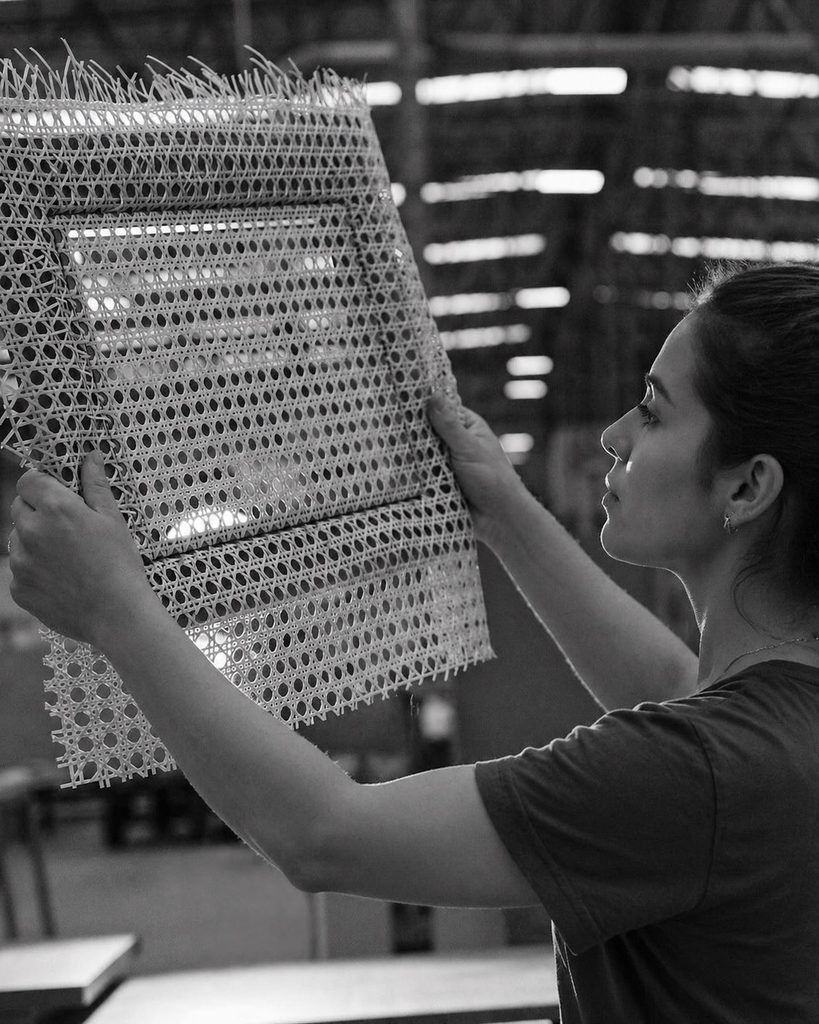
Hold a sheet of cane webbing up to the light, and you see everything at once. Each crossing shows, and so does any strand where the weave runs loose. The check takes only a few seconds.
Once the piece is installed, nobody notices it. Even so, that kind of care is a big part of why cane cabinet doors are back in contemporary homes.
Where cane comes from
Cane is the glossy outer skin of rattan, a climbing palm from the rainforests of Southeast Asia. First, the skin is peeled into thin, even strips. Then those strips are woven into the open, octagonal pattern most people picture.
The weave became famous in 19th-century Vienna. At the time, Thonet used it on the seats of its bentwood chairs. Since then, it has never really left. In Brazil, where Boa Vista was born, cane is also a familiar sight. You’ll find it in grandmothers’ dining chairs and in the mid-century pieces designers still collect.
Why it’s back
Texture comes first. After years of flat, smooth surfaces, people want materials they can feel. Cane delivers that with almost no visual weight. Because light and air move through it, even a tall door with a cane panel feels light. It also softens a room full of stone and lacquer. Plus, it brings a little memory along with it.
Meanwhile, forecasts for 2027 point the same way. They keep returning to craft you can actually perceive: the visible joint, the grain, the small variation that shows a person was involved.
Where the hands come in
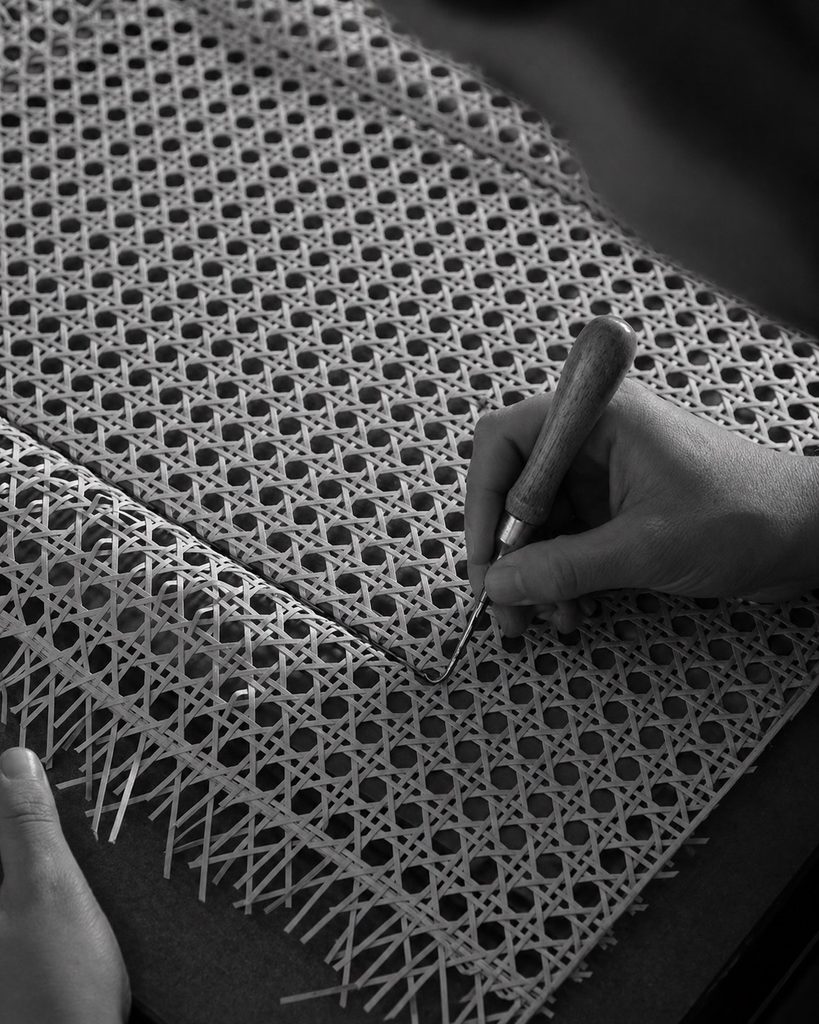
Today, most cane webbing is woven on looms, which keeps the pattern even. However, turning it into furniture is still largely handwork.
First, the sheet is chosen and cut to size. Next, it soaks in water until it turns supple. After that, it’s pressed into a groove around the frame and locked in with a thin reed spline. As it dries, the cane tightens like a drum. Getting that tension right takes experience. The same goes for keeping the weave perfectly square to the frame.
Where cane works best in custom millwork
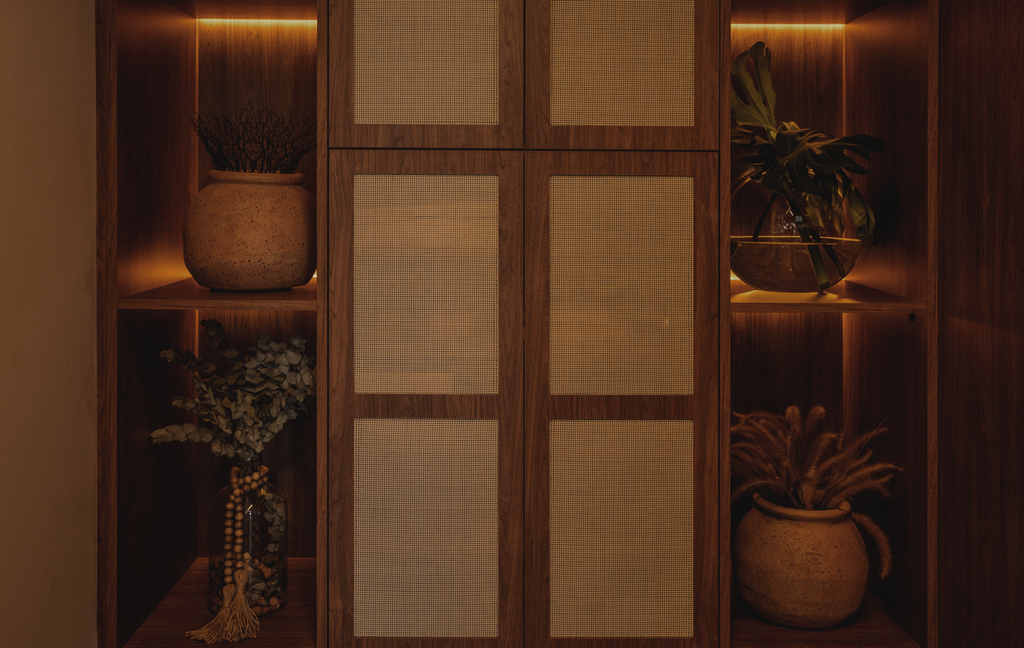
Cane cabinet doors are at their best on wardrobes and closets. There, they let the interior breathe and keep a tall wall of doors from feeling heavy. In a dining room, a sideboard or bar cabinet with cane fronts works well, too. It hints at what’s inside without showing everything. Similarly, headboards and bedroom built-ins take on its warmth with ease.
Kitchens, on the other hand, call for a lighter touch. Usually, an upper cabinet, a pantry door or the end of an island is enough. For the best result, pair cane with wood tones that bring out its natural honey color. Over the years, that color deepens. That’s one more reason cane suits homes meant to be lived in for a long time.
See it up close
Cane photographs well and feels even better in person. At our Charlotte showroom, you can run your hand over a cane panel, see how it sits within the frame and picture it in your own home. We’d love to show you.